

GLP-1 Diet Plan: What to Eat for Better Results
October 27, 2026
You may have recently gone to your doctor to help manage Type 2 diabetes or your blood sugar levels and came home with a prescription for Ozempic. Right around the same time, it is possible that you start noticing changes in your appetite, digestion, or sleep.
And if falling asleep has become a bit difficult, then it is important for you to understand the possible link to discuss with your healthcare provider. Although insomnia is not listed as an established side effect, some people have reported sleep difficulties while taking semaglutide.
This makes you really think at some point, “Does Ozempic cause insomnia?”
At the end of the day, you never know; it could be worth taking a closer look.
Does Ozempic Cause Insomnia? Exploring the Details

If your sleep has changed since starting Ozempic, it is reasonable to wonder whether the medication is responsible. However, it is important to note that the available evidence does not directly answer yes to the question, “Does Ozempic cause insomnia?” Even so, some people report difficulty falling asleep or staying asleep during treatment.
A clinical trial analysis found that 2.4% of people taking semaglutide reported insomnia, compared with 2.4% of those receiving a placebo. Since both groups reported the same rate, the findings do not suggest that semaglutide increased the risk of insomnia in that trial.
How Ozempic May Affect Your Sleep

What most people do not realize is that even when a medication does not directly cause insomnia, changes associated with treatment may influence your sleep routine.
Here are some reasons that may help you identify what might be contributing to nighttime restlessness.
1. Gastrointestinal Discomfort Can Interrupt Sleep
Ozempic slows down the movement of food through your stomach, which helps control appetite and blood sugar. However, this slower digestion can sometimes cause stomach discomfort, especially while your body is adjusting to the medication.
You may experience nausea, constipation, diarrhea, bloating, or acid reflux. These symptoms can be especially bothersome at night. For example, nausea may make it harder to settle into bed, while acid reflux can cause discomfort when you lie down.
These digestive issues are usually more noticeable when you first start Ozempic or increase your dose. They may ease as your body adjusts, but make sure to discuss persistent symptoms with your healthcare provider.
2. Blood Sugar Changes May Contribute to Nighttime Waking
Blood glucose regulation is another factor worth considering when trying to figure out does ozempic affect sleep. Keep in mind that while Ozempic helps improve blood sugar control, some patients also take other diabetes medications that can increase the risk of hypoglycemia.
Low blood sugar can cause symptoms such as sweating, shakiness, dizziness, a rapid heartbeat, and confusion. These symptoms may wake you during the night or make it difficult to return to sleep.
The risk of hypoglycemia is particularly important when Ozempic is used alongside insulin or sulfonylureas. The FDA prescribing information for Ozempic explains this increased risk and the importance of appropriate medication management.
If you experience nighttime sweating, trembling, or unusual weakness, discuss these symptoms with your healthcare provider. They can review your glucose readings and current medications to determine whether adjustments are necessary.
3. Changes in Appetite and Eating Patterns May Affect Rest
Ozempic reduces appetite, which can change how much and when you eat. You may begin having smaller meals, skipping snacks, or eating dinner earlier than usual. These changes in your diet plan can influence your nighttime routine, particularly if your overall food intake becomes too low.
Going to bed hungry may cause discomfort for some people, while eating a large meal late in the evening can worsen nausea or reflux. Finding a suitable meal schedule can help you maintain adequate nourishment without putting unnecessary pressure on your digestive system.
A balanced eating plan should account for your treatment goals, nutritional requirements, and individual tolerance. If your appetite has decreased significantly, a healthcare professional or registered dietitian can help you plan meals that provide sufficient nutrients.
Do Other GLP-1 Medications Cause Insomnia?
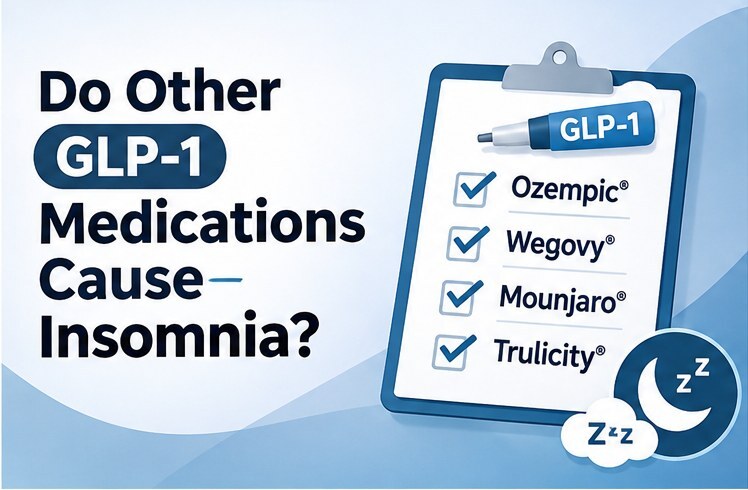
Ozempic is one medication within a broader group of treatments that influence GLP-1 receptors. People sometimes report sleep changes while taking other medications in this category, although the available evidence does not establish a direct relationship between these treatments and insomnia.
But the question “can GLP-1 cause insomnia?” continues to come up here and there.
Here is all that you need to know about different medications and their connection with insomnia.
Semaglutide and Wegovy
Ozempic and Wegovy contain the same active ingredient, semaglutide, but they have different approved uses and prescribing instructions. If you are wondering whether Wegovy affects sleep, the available evidence does not establish insomnia as a common direct side effect of semaglutide.
The same distinction applies when discussing semaglutide insomnia. Some users report sleep difficulties, but clinical evidence has not confirmed that semaglutide directly causes this problem.
Zepbound and Mounjaro
Zepbound and Mounjaro contain tirzepatide, which acts on both GIP and GLP-1 receptors. Although these medications share some similarities with semaglutide treatments, they contain a different active ingredient.
Questions such as does Zepbound or Mounjaro cause insomnia require the same careful distinction between reported symptoms and established medication effects.
Reports of Zepbound, Mounjaro, and tirzepatide insomnia do not necessarily mean that these medications are responsible for every sleep problem experienced during treatment. Individual health conditions, digestive symptoms, other prescriptions, and lifestyle changes may also contribute.
How Long Does Insomnia Last While Taking GLP-1 Medication?
The duration of sleep difficulties varies according to their underlying cause. If nighttime waking is connected to temporary nausea or digestive discomfort, symptoms may improve as your body adjusts to treatment. However, sleep problems caused by another health condition or medication may require a different approach.
People sometimes ask, does Zepbound insomnia go away, or how long does Mounjaro insomnia last. But the thing is, there is no established timeline for insomnia caused by these medications because a direct causal relationship has not been confirmed. The same applies to sleep difficulties reported during Ozempic treatment.
Avoid assuming that persistent insomnia will resolve on its own. If your sleep has changed significantly, a professional can review your symptoms, current prescriptions, and treatment schedule. They can also determine whether further evaluation or a change in your care plan is appropriate.
Final Thoughts
Sleep is an important part of overall health, especially when you are managing blood sugar levels or working toward weight management goals. If you have noticed changes in your sleep since starting Ozempic, make sure to take the time to understand the possible causes that can help you take the next step with ease.
At Ayanna Essential Healthcare, LLC, we believe that quality healthcare should be accessible, compassionate, and tailored to each patient’s needs. Our weight loss management include personalized treatment discussions, medication options when appropriate, and support that considers your broader health needs.
Whether you have questions about does Ozempic causes insomnia, medication side effects, or your current weight management plan, our team can help you discuss your concerns and explore suitable next steps.
Contact us to schedule a consultation and receive guidance based on your individual health needs.